
Hays County runs from rugged Hill Country around Dripping Springs, Driftwood and Wimberley down across the Balcones Escarpment to the prairie along I-35 at Buda, Kyle and San Marcos. The west side is limestone hills, cedar and oak, and clear creeks: Cypress Creek flows out of Jacob’s Well into Wimberley and the Blanco River, and the drive along RM 32 over Devil’s Backbone shows how steep the country gets. To the east, springs feed the San Marcos River at Spring Lake.
Growth has pushed hard into western Hays County, and most of it lands on steep, cedar-covered ground. New owners along US-290, RM 12 and FM 1826 need homesites and driveways cut through rock without losing their oaks, and the hill country west of Wimberley is prime golden-cheeked warbler territory.
This is also aquifer country, so land clearing in Hays County means planning for slope, drainage and what’s under the ground. We’ve cleared steep, difficult ground in Wimberley, and an owner walks every property before we quote.
Communities we work in Hays County
- Dripping Springs
- Wimberley
- Driftwood
- Woodcreek
- Buda
- Kyle
- San Marcos
Steep limestone over two aquifers
Western Hays County is steep limestone with thin soil, and rain moves fast. The Blanco River through Wimberley is known for dangerous flooding, and Onion Creek and Cypress Creek can rise quickly too. Much of the county sits over the Edwards and Trinity aquifers, where caves, sinkholes and fractures connect the surface to groundwater.
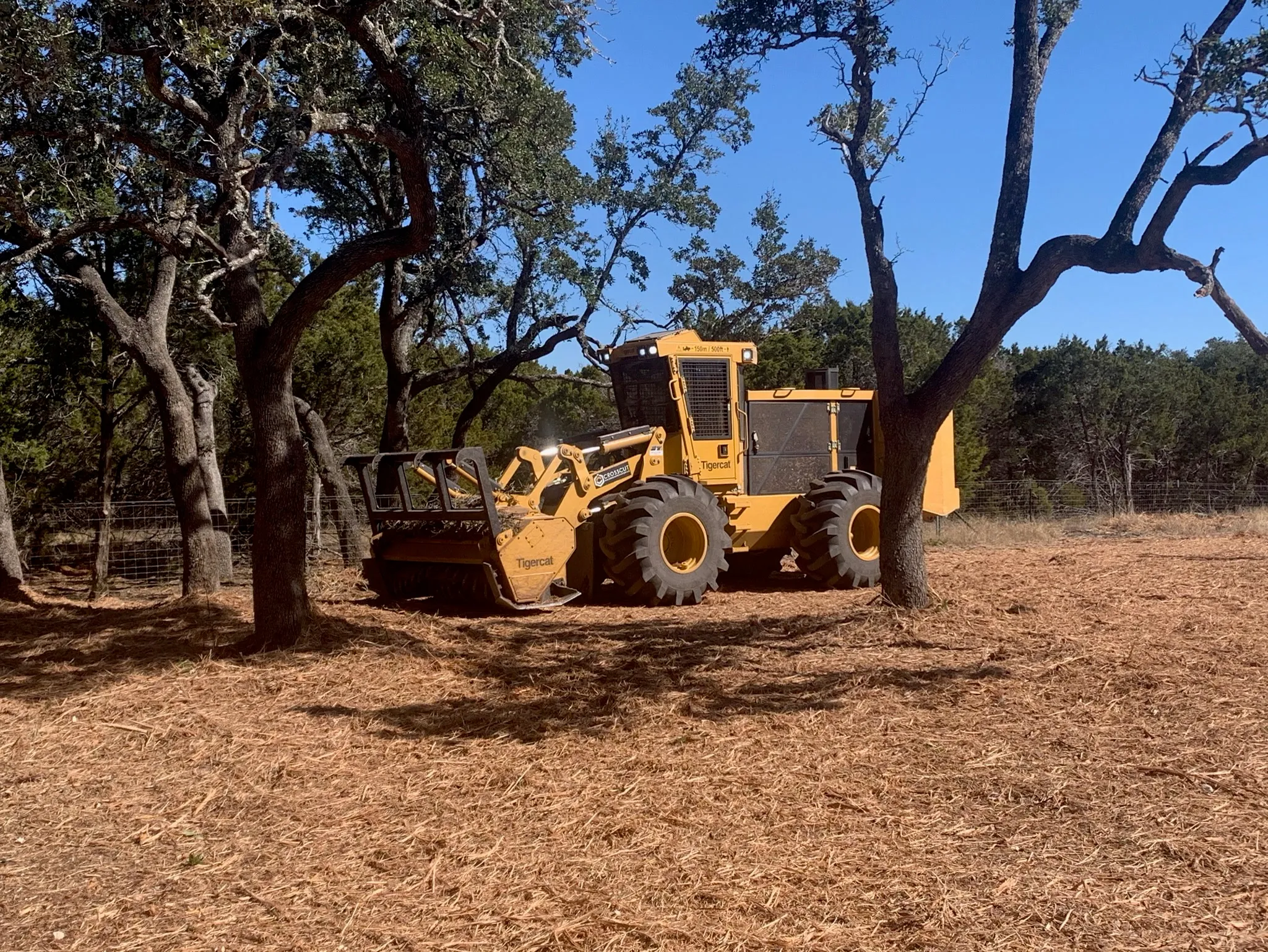
Typical projects are homesite and driveway clearing on steep lots around Dripping Springs and Driftwood, selective cedar removal to free oaks and open views in Wimberley, stone breaking for pads and roads, and brush management on creek and river properties along the Blanco. On bigger rural tracts we mulch cedar for wildfire and water management.
One of the more regulated rural counties
TCEQ Edwards Aquifer rules apply across the recharge, transition and contributing zones, and clearing five or more acres in the contributing zone can trigger requirements. Mature oak-juniper woodland can be golden-cheeked warbler habitat protected under federal law.
Floodplain rules apply along the Blanco River and major creeks, and Dripping Springs, Wimberley and other cities have their own development rules. We confirm what applies to your parcel and follow oak wilt guidance on every job with oaks.