
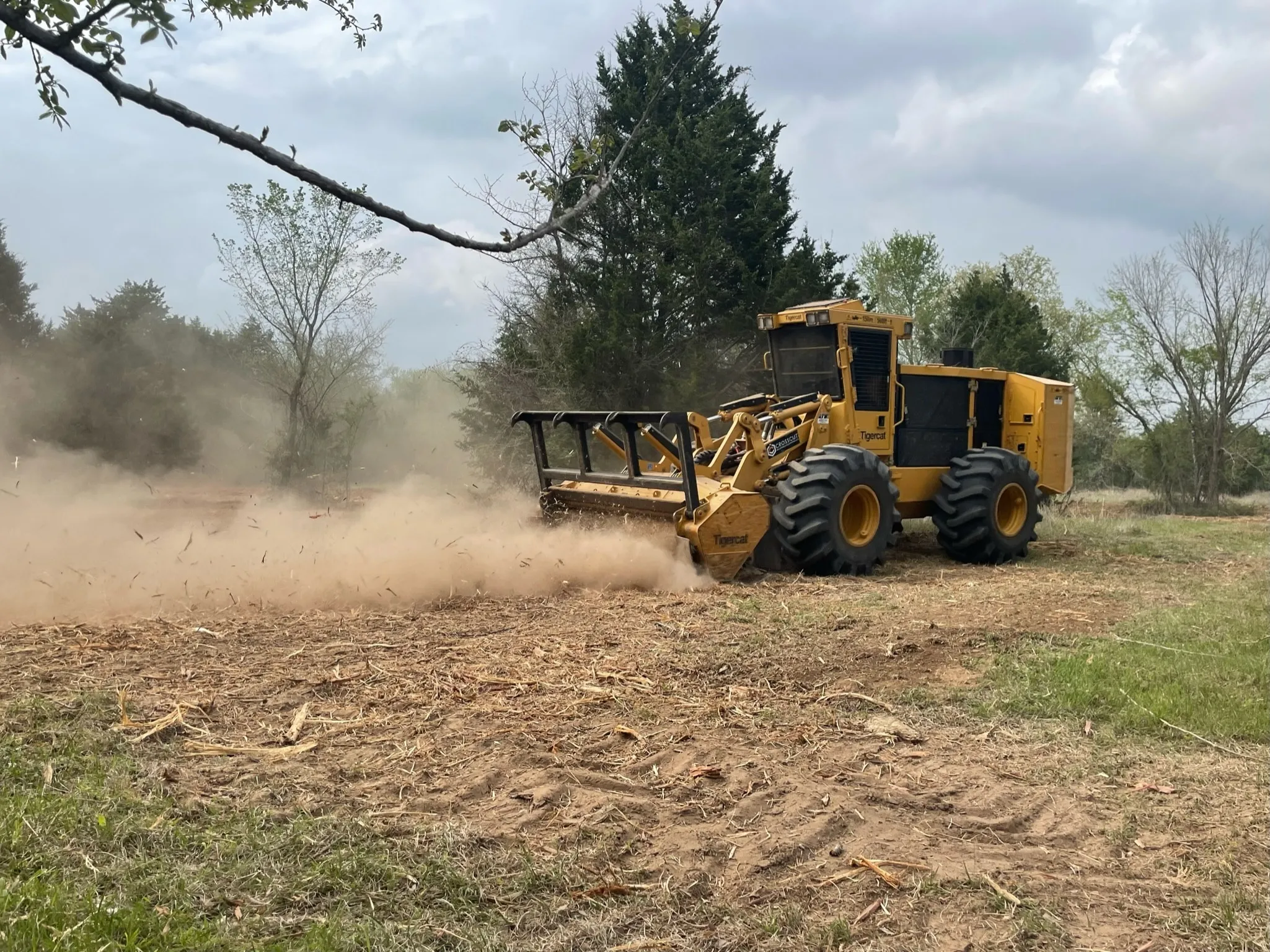
Forestry mulching is the core of what Crosscut does, and it’s the main reason landowners in Bertram, TX and across Central Texas call us. A heavy machine with a spinning drum on the front, lined with teeth, grinds trees, stumps, logs, shrubs and woody brush into mulch, and that mulch stays on the ground as cover.
There’s no piling, no hauling and no burning, which means less mess and less liability than the old way of clearing. It works year round, keeps going through burn bans, and leaves the property looking open and park-like instead of scraped bare.
What the mulch does for your ground
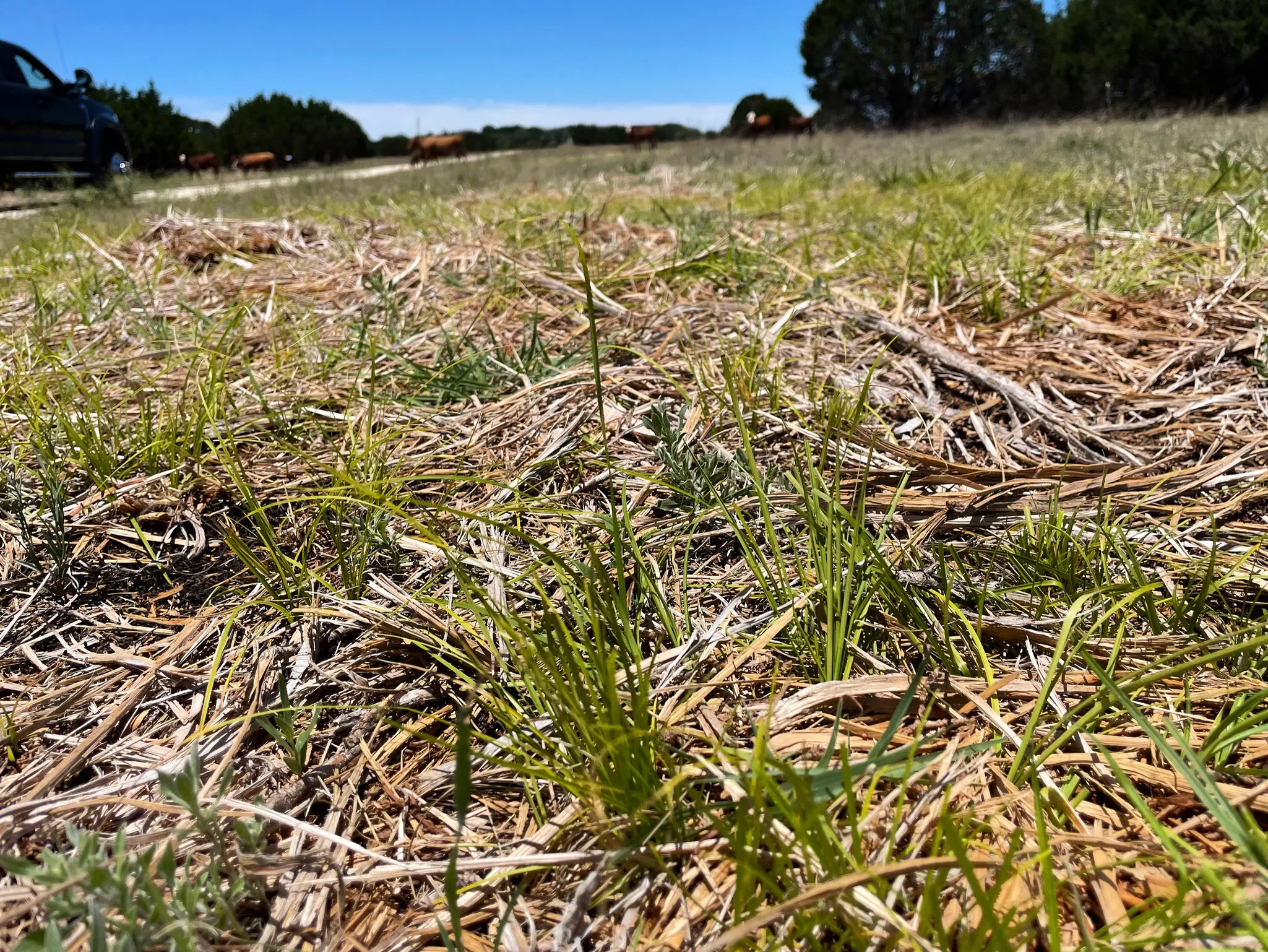
The mulch layer isn’t waste. It settles into the soil and keeps working long after the machines leave.
On a typical Hill Country tract, that means the ground under the cleared brush stays covered through the next dry spell and the next hard rain, instead of baking or washing away while you wait for grass.
- Holds moisture in the soil, which matters most in a drought
- Spreads organic matter evenly across the site
- Keeps soil cooler than bare ground
- Cuts erosion because root systems stay in the ground
- Most species cut to the ground this way won’t re-sprout (mesquite is the exception)
- Gives young planted trees a better shot at surviving and growing
Why mulching beats piling, hauling and burning
Push-and-pile clearing scrapes the topsoil, leaves bare dirt to wash away and hands you a stack of brush to deal with. Burning those piles means waiting on the weather and the county, and watching a fire. Hauling means trucks, trips and torn-up ground.
Mulching skips all of it. The ground stays covered, the roots that hold the soil stay put, and the work isn’t tied to a burn window. That’s a big reason it’s usually the most practical way to clear brush in the Hill Country.
Mosaic cutting and underbrush mulching
Not every job is a clean sweep. Mosaic cutting leaves clumps and islands of brush and trees in a pattern, so you open the ground but keep cover, shade and edges for wildlife. It’s a good fit for hunting land and for owners who want the property to still feel wild.
Underbrush mulching goes the other way: the canopy stays and everything crowding beneath it comes out. Under live oaks that usually means cedar, yaupon and scrub mulched down so you can see through the trees and walk under them again.
The two can be combined on one property. A homesite might get clean underbrush mulching close to the house and a mosaic cut farther out where the deer move.
Sloped clearing and tight spots
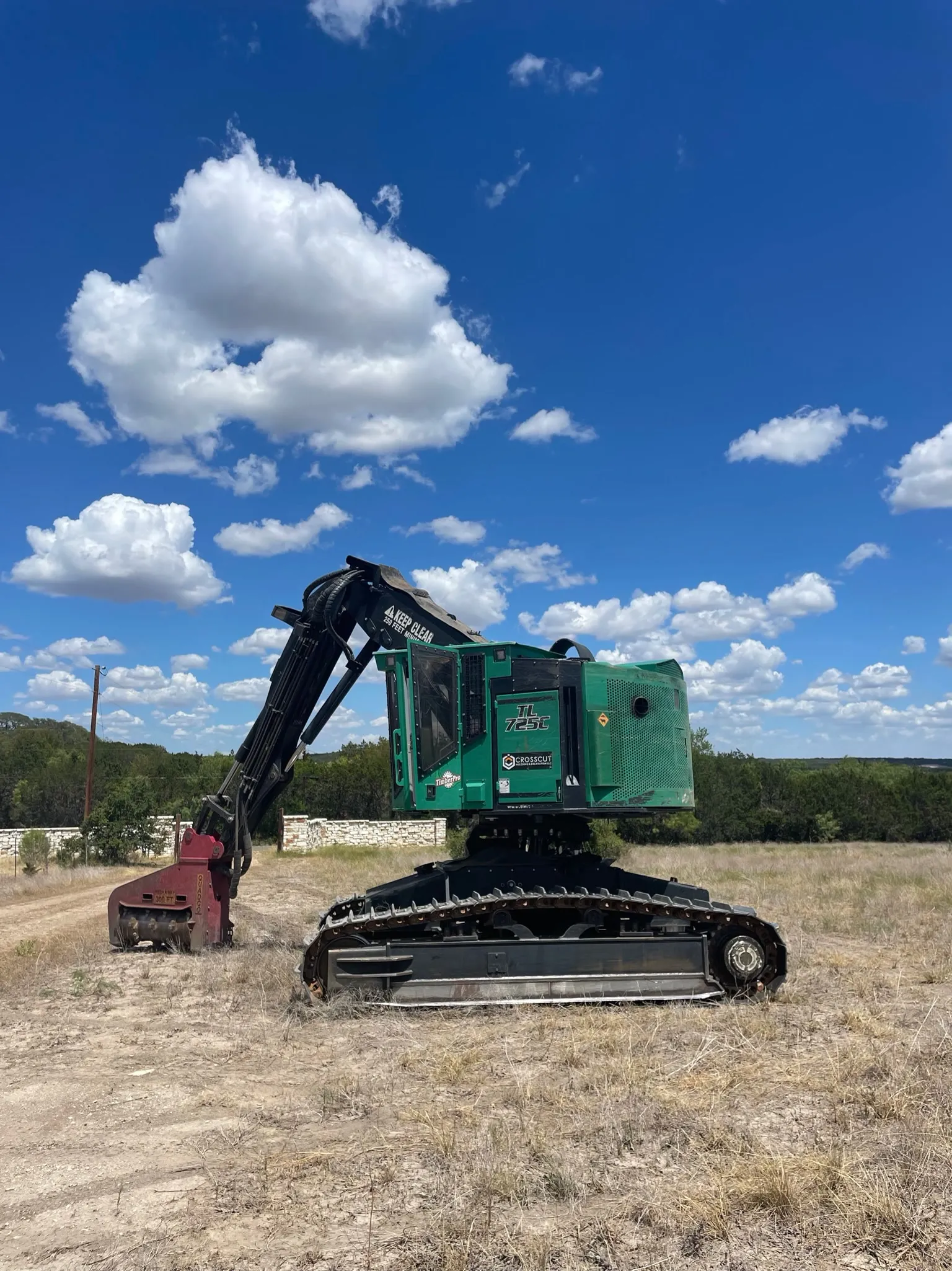
Hill Country ground is rarely flat. On steep, rocky slopes the Timberpro TL725C reaches out with a boom-mounted mulching head, so the tracks stay on solid footing while the head works the hillside. It can also reach over fences and drainages without crossing them.
On trails, fence rows and narrow openings, the Cat D1 dozer mulcher and the mulching heads on our Cat skid steers get into places a big machine can’t. A hand crew with chainsaws finishes around trunks and structures.
Matching the machine to the job
On dense cedar, thick yaupon and heavy brush across open acreage, the Tigercat M726G does the heavy lifting. On big jobs a smaller machine often follows it to fine-tune the finish and get that park look.
How fast it goes depends on density, terrain, tree size and the finish you want. That’s why an owner walks the property before you get a number or a schedule, and you’ll know which machine is coming and why.
Every mulching job also gets a hand crew on the details. Chainsaws handle the cedar tight against a keeper oak, the brush along a fence and anything close to a house or barn, so the machines can stay where they work best.
What the job can include
- Forestry mulching
- Cedar and underbrush mulching
- Brush mulching
- Mosaic cutting
- Sloped clearing
- Trail and lane mulching
- Hand-crew finish work around trees and structures