
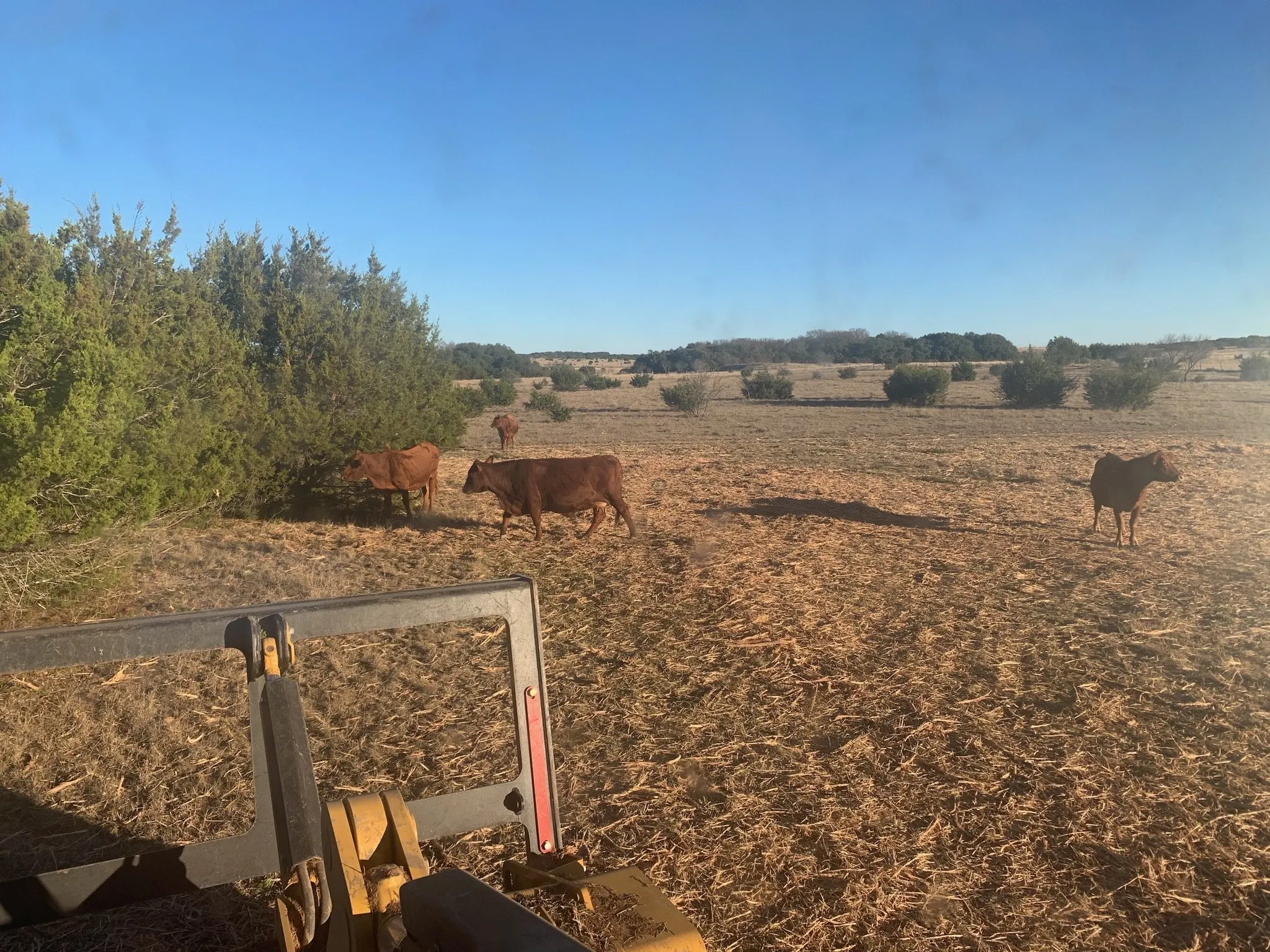
Pasture restoration brings brushed-over grazing land in Bertram, TX and across Central Texas back into production. Mesquite and cedar creep onto open ground until there’s more brush than grass, and the only fix is to clear it back out so your livestock have room again.
We do it with a mix of mulching and grubbing, picked for what’s growing on your place. The mulching side has its own payoff: it helps grass come back, and cows and wildlife love freshly mulched land. Every pasture job starts with an owner walking the field with you, looking at what’s growing, where the water goes and what you want the land to carry.
Mulch some, grub some
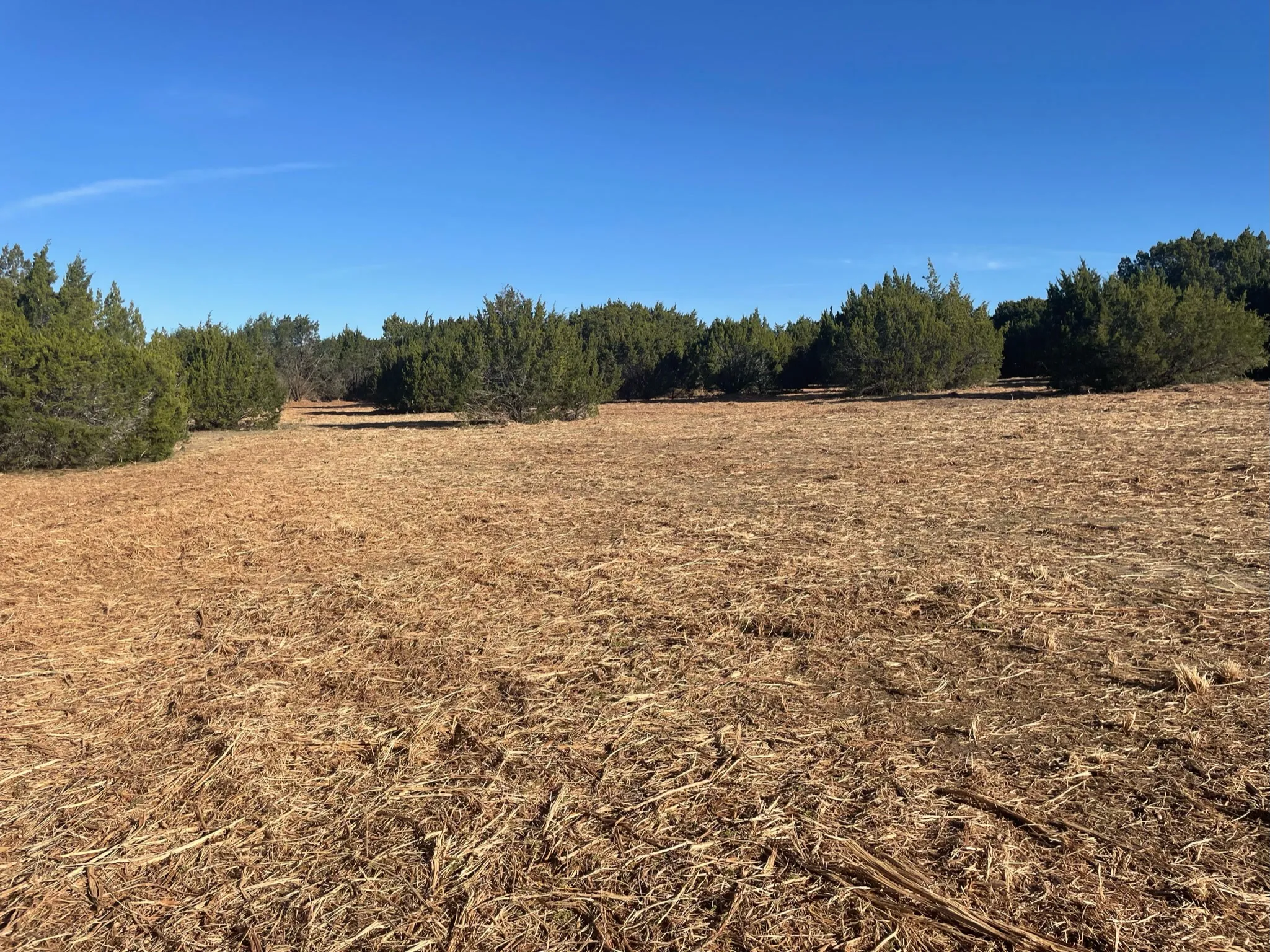
Cedar can be mulched to the ground and won’t re-sprout, so it’s ground in place and left as cover. Mesquite and huisache come back from the root, so they get grubbed out with the John Deere dozer and root rake.
Most pastures have both, which is why we look at the whole field before deciding. You end up with one plan, one crew and ground that stays open instead of filling back in.
On open grazing ground with heavy cedar, the Tigercat M726G does most of the mulching. Draws, slopes and rocky spots go to the Timberpro TL725C, and the Cat skid steers clean up scattered regrowth and work close to fences and water.
Why grass comes back faster
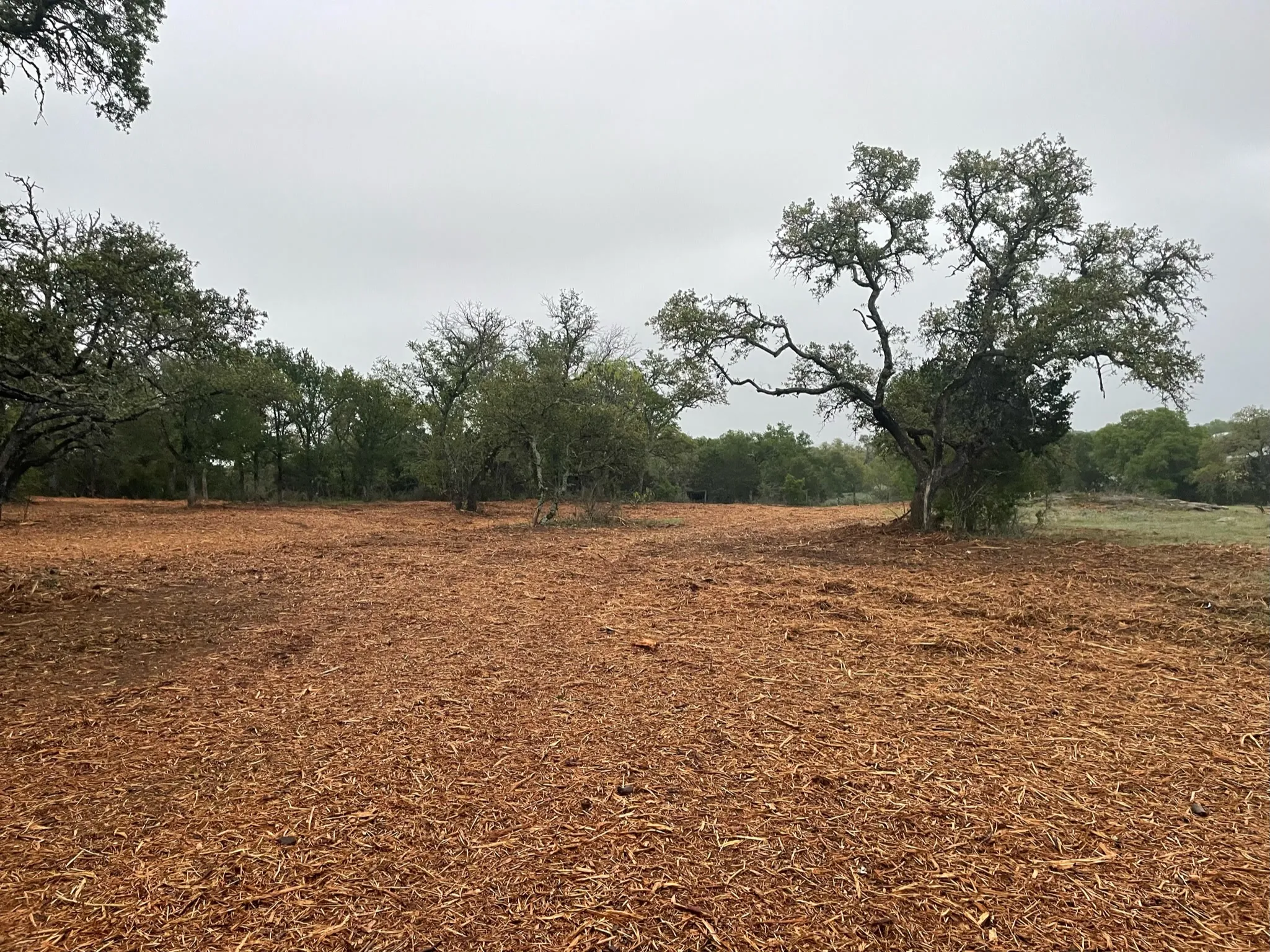
The mulch layer holds moisture in the soil, keeps the ground cooler and spreads organic matter across the field. With the brush canopy gone, sunlight and rain reach the ground again.
That’s often enough for native grass to start coming up on its own. Owners who want to seed or plant can do that on ground that’s ready for it, especially where grubbing and root raking have opened the soil.
Pasture restoration is also a long game. Brush will try to come back from seed, so a quick touch-up on regrowth a few years out keeps the field in grass instead of starting over.
USDA and NRCS grant projects
Crosscut supports USDA and NRCS grant projects, which can help fund ranch land clearing and pasture restoration. If you’re working with one of those programs or thinking about applying, tell us on the first call.
We’ll plan the clearing around what your program calls for, and the owner walking your land can talk through how the work fits it.
Grant projects usually come with a plan for what gets cleared and how. Following it closely matters, so we go over those details with you before the machines show up instead of after.
Keeping shade and cover where you want it
Restoring a pasture doesn’t have to mean leaving it bare. Shade trees for cattle, tree lines along a creek and cover for wildlife can all stay. We mark them on the walk-through so the machines work around them.
Some owners also leave scattered brush clumps for quail, deer and turkey. A pasture can carry cattle and still hold wildlife if the cover is left in the right places.
Oaks left in the pasture get the same care as on any other job, following Texas A&M Forest Service oak wilt guidance on timing and wound painting.
Fences, water and access
A restored pasture works best when the rest of the place does too. Fence rows overgrown with brush can be cleared at the same time, so you can see your fence and keep livestock where they belong.
If the herd needs water, we also build and clean out stock tanks, and we can open up the ranch roads that get you to the back of the property. It’s easier to plan all of it on one walk.
That walk is led by one of the owners. They’ll look at what’s growing, how the water moves across the field and what you want the pasture to carry, then lay out the plan and the schedule from there.
What the job can include
- Pasture and rangeland reclamation
- Brush encroachment removal
- Invasive vegetation removal
- Cedar mulching on grazing land
- Mesquite and huisache grubbing
- Fence row clearing
- USDA and NRCS grant project support